

Welcome! Things are looking less post-apocalyptic this week, which is an improvement. I’d rather live in the pre-apocalypse, I think.
Because it’s summer, this week I am kicking back and letting some others do the work. Damien Moule has taken a look at Toronto’s famously slow streetcar system and why several supposed “silver bullet” fixes have generally missed the target. If you’ve ever wanted to get deep into the weeds of what “transit signal priority” actually means, this is the newsletter for you.
City Hall Watcher is also welcoming its first-ever reporting contributor this week. Andrey Levkovski will be hanging around City Hall and contributing material to CHW for the rest of the summer. If you need to get in touch, you can email him at andrey@cityhallwatcher.com.
To celebrate this week’s non-Matt contributions, this issue of City Hall Watcher is being sent free to all subscribers. If you dig it, consider becoming a paid subscriber. You’ll get access to this kind of content each and every week, plus the interactive COUNCIL SCORECARD. It supports independent journalism and costs just six bucks a month or $60 a year, plus HST — a bargain and a deal.
✨ This issue runs a bit long. If it gets cut off in your email client, read it on the web.
— Matt Elliott
matt@cityhallwatcher.com / Archives / Subscribe
Toronto’s slow streetcars need more than a quick fix
By Damien Moule
When the Finch LRT opened back in December, there was an outcry about how slow it was1. And not just in niche transit circles. It made the papers. It made the evening TV news. People raced the transit vehicles on foot — and won.
Politicians sprang into action. TTC chair Jamaal Myers introduced a motion at December’s TTC Board meeting to look at improving signal priority and frequency, and to review TTC operating practices for the line to look for ways to speed up the LRT. Days later, at a City Council meeting, Mayor Olivia Chow introduced a motion asking the TTC to improve transit signal priority along the line.
By April, the TTC’s data showed a ten-minute time saving per direction, and by June, another five-minute saving. The $3.7 billion Finch LRT started moving faster than the bus it replaced. There was much rejoicing.
The initial slow speeds of the Finch LRT naturally raised comparisons to the sluggish streetcar network. And so, along with the motions to improve the Finch LRT came requests to investigate how to speed up the streetcars. In the same April report measuring improved speeds on the Finch LRT came a plan from the TTC to begin improving streetcar speeds. This came hot on the heels of the July 2025 approval of the painted Bathurst streetcar lanes that were rolled out ahead of the World Cup, and the December 2025 approval of parking and turning restrictions to speed up the Dundas streetcar.
Now, for those of us who live along a streetcar line, these have been frankly unexpected developments. The streetcars, while iconic, are notoriously the slowest and least reliable part of the TTC, and elected officials have long seemed perfectly happy to leave it that way. Past attempts at improvements, such as the King Street transit priority corridor, have been undermined by spotty enforcement, construction diversions, and frequency cuts.
You might expect that the streetcars finally receiving some focused attention from the TTC Board and City Council would make me happy. But you would be wrong. Instead, the last year has left me exasperated.
The streetcars are slow… like really slow
Before getting to my complaints let’s do some table setting. Toronto’s streetcars are slow. I know I’m not breaking any news by saying that. For as long as I can remember people have been making the joke that it’s usually faster to walk than take the streetcar. But I want to make sure you read that sentence with the right emphasis. It’s not that streetcars are slow. It’s that Toronto’s streetcars are slow.
Jan Scheurer, a professor at the Royal Melbourne Institute of Technology, evaluated the speeds of 16 different streetcar2 systems across multiple years and found that Toronto’s streetcars in 2024 were the slowest of any system in any year reviewed. And not just a little slower. A lot slower.
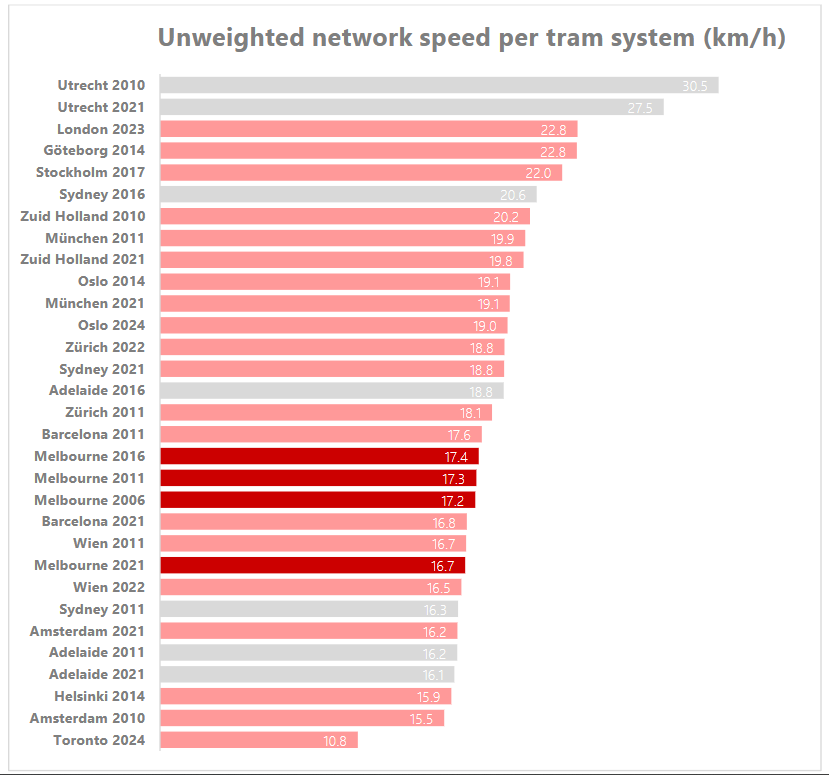
The TTC has also compared streetcar speeds to those from five other international cities and found the same thing.
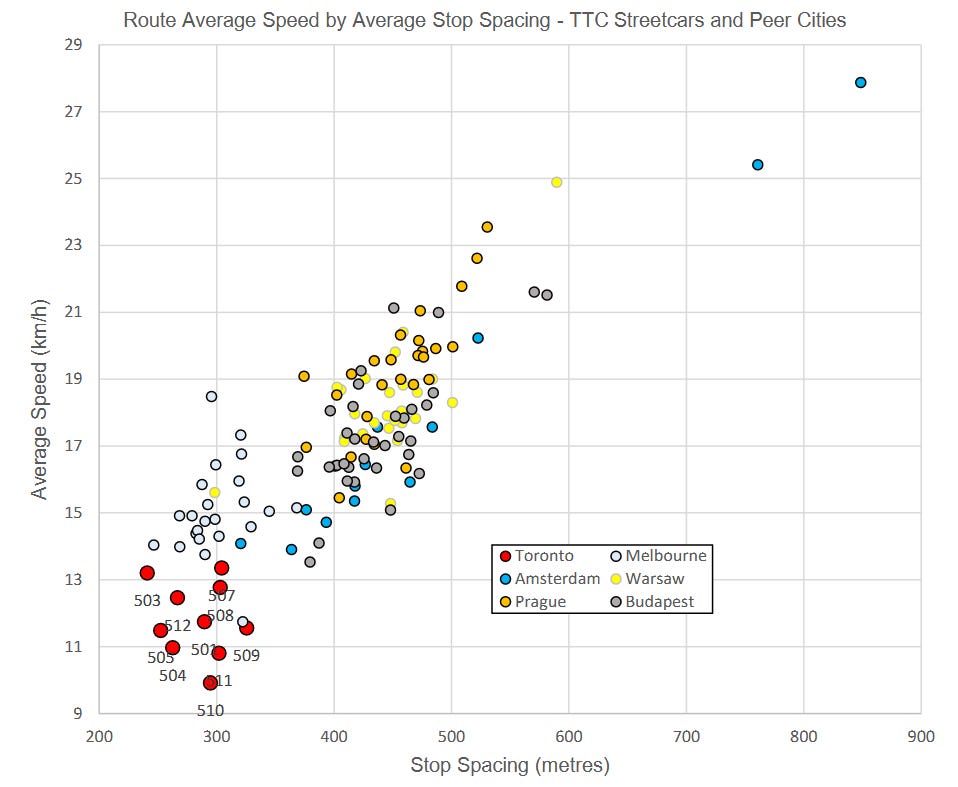
Now I am not willing to go so far as to say the Toronto streetcars are definitively the slowest in the world3, but I think it’s clear that Toronto’s streetcar network is one of the slowest major streetcar systems in the world. And it’s also clear that the difference in speeds between the fastest and slowest streetcar networks is quite large.
The never-ending search for silver bullets
Stop me if you’ve heard this before4. The streetcars would be fixed if we just put them in their own lanes. The streetcars would be fixed if we just gave them signal priority. The streetcars would be fixed if we just used wider stop spacing. The streetcar routes would be fixed if we just replaced them with buses.
This search for the one trick that will fix the streetcars has been going on for as long as I can remember. The idea that all a streetcar needs to be good is its own lane has been around since at least the 90s when the Harbourfront Streetcar, and later the Spadina and St. Clair streetcars, were given their own separated lanes. It carried on through Transit City, and Metrolinx seemed to be relying on the same thinking for both the Finch LRT and the above-ground sections of the Eglinton Crosstown. And it was still lurking around in 2025 when Council voted to give the Bathurst streetcar its own lane.
Why is this a problem? Aren’t transit lanes good? Well, they can be good. And they usually are OK, or at least better than nothing. But the search for silver bullets leads to a really bad habit of focusing on the buzzword and not the quality of the improvement. The focus becomes “is the proposal a dedicated streetcar lane?”, and not “will the proposed streetcar lane, you know, work”?
Let’s take the Bathurst painted streetcar lane as an example.
There are multiple ways streetcars get slowed down by cars. Let’s focus on a few of them. Streetcars can be stuck behind a car waiting to make a left-hand turn. They can be forced to slow down while a car turns across or goes straight across its path or does a three-point turn. They can be forced to wait while a car is pulling into an on-street parking spot in the right-hand lane or stopped for a quick drop off (sometimes called curb friction).
A dedicated streetcar lane can tackle all of these problems. But the Bathurst lane did not5. By my count, the design of the transit lanes only blocks left-hand turns from delaying the streetcar at 6 of the 236 intersections along the route, and only half of those were new restrictions. Everywhere else, cars are either still allowed to enter the transit lane directly to make a left turn, or get a dedicated turn lane and signal, which also slows down the streetcar. Even fewer of the streets have been blocked from allowing left-hand turns onto Bathurst7 or travel across the transit lane.
Really, most of what the transit lane is doing in terms of transit priority is removing parking spaces in the curb lane and adding no-stopping regulations (to the extent these are enforced), which reduces curb friction.
That’s not exactly nothing8, but it’s also not good transit priority. However, if all you’re looking for is a silver bullet called “dedicated transit lane”, then job done, time to go home.
What happens if that one silver bullet doesn’t work? We can always just move on to the next one. Which is exactly what I see starting to happen with transit signal priority, only this time the TTC is also adding to the confusion.
Transit signal crossing
Let’s go back to the April report measuring improvements to speeds on the Finch LRT and Eglinton Crosstown surface sections. That was only one part of a larger report to lay out a plan for improvements to the streetcar lines.
If you read the recommendations and summary section of the report, you could be forgiven for thinking that transit signal priority had arrived for the LRTs, been a great success, and would now be rolled out to the streetcars. Two of the four recommendations were to implement transit signal priority measures. Recent transit signal priority enhancements were reported to deliver time savings of up to 42% per intersection. And the round-trip time was reduced by 10 minutes on Eglinton and 20 minutes on Finch.
The only problem? No new9 transit signal priority was rolled out on the Finch or Eglinton LRTs between December and April. What the TTC did instead was called lagging left-turns. Instead of a red light followed by a left turn signal followed by a green light, they changed the intersections to be a red light followed by a green light followed by a left turn signal. The TTC called this transit signal priority in the report. Reporters understood the TTC to be saying that lagging left turns are transit signal priority. But they aren’t.
A lagging left turn changes the order in which the signals in a cycle appear, but it does not change the total amount of red light time in the cycle. If there are 75 seconds of red time between the cross traffic movement and the left turn signal, it doesn’t matter what order those phases are going in — the odds of the LRT vehicle showing up at a red light are mathematically unchanged. All you change is which cars the people on the LRT are likely to see moving instead of them during the red light. With a lagging left turn, they are less likely to see left-turning cars because that happens immediately after the green instead of immediately before it. But they still take the exact same amount of time to turn.
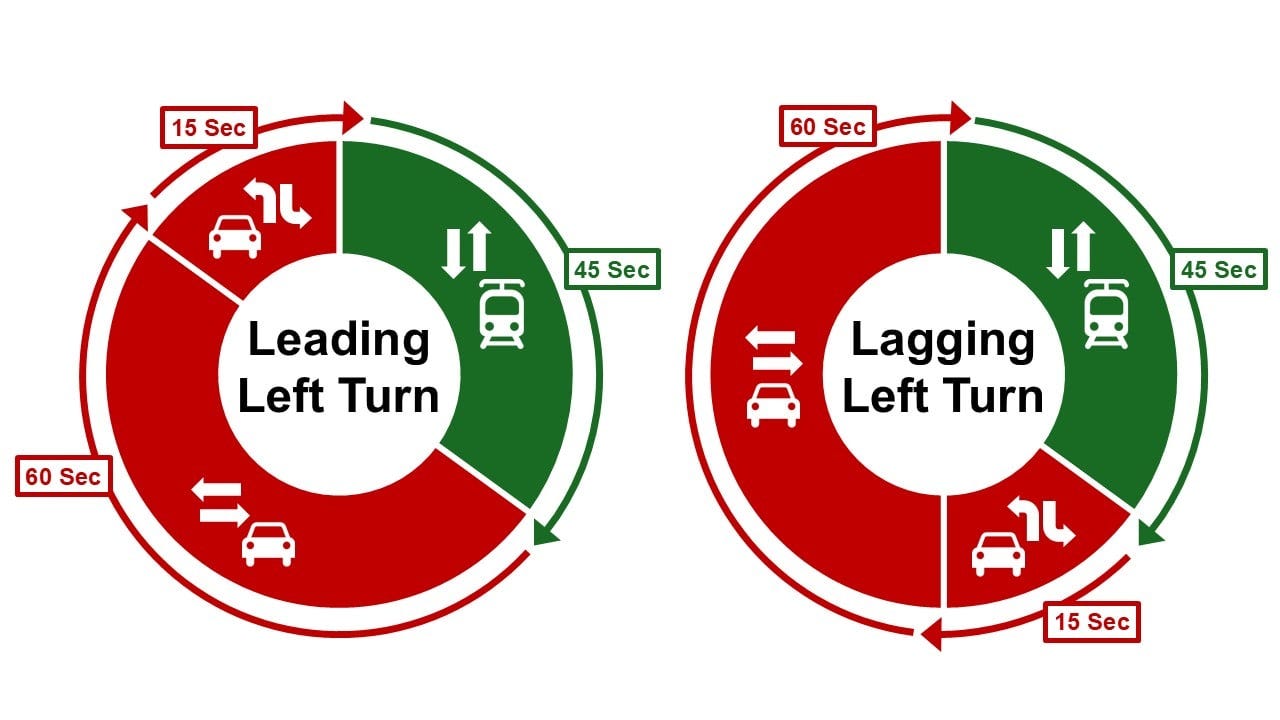
This is in contrast to phase rotation, where the order of the phases are changed depending on whether an LRT is present. So if the normal phase order is cross traffic, left turn, green, that can be dynamically changed to cross traffic, green, left when the LRT is waiting. This reduces the red time the LRT is facing, and so is actually transit signal priority. But if you read the TTC’s report carefully, this wasn’t rolled out on Finch or Eglinton. It was tested at two intersections on Spadina, which showed the 42% improvement referenced in the summary. The TTC is now planning to install phase rotation into the LRT lines, but it certainly wasn’t improving anything in the meantime.
So what actually improved the speeds on Finch and Eglinton? If you read down through the report sections it becomes clearer. The TTC changed the operations of the two LRTs. They reduced dwell times at stops and added operators so that they could swap operators at the end of a trip, so that mandatory breaks wouldn’t delay the vehicles. I also read speculation on social media that the padding from the trip schedules was reduced, and that speed limits were raised to match the adjacent car traffic, but I haven’t seen that confirmed by the TTC.
The TTC didn’t hide these operational changes, but it certainly didn’t emphasize them. Why? I would guess it’s because they aren’t transit signal priority, and everyone wanted transit signal priority. Council asked for transit signal priority. Advocates asked for transit signal priority. So the TTC spent some time and money tinkering with the signals to do nothing, and then also did some other actually effective stuff, and said voila, transit signal priority achieved.
I obviously would have liked for the TTC to communicate better about what it was doing, but this also matters going forward. The same report outlined a host of stale operations rules that are slowing down the streetcars. And the streetcar lines without dedicated lanes (i.e. most of them) won’t be able to use phase rotation because, for the most part, traffic lights along their routes don’t have left turn signals to be rotated. So what can actually be done in the near term to improve most streetcar lines isn’t transit signal priority, and it’s definitely not installing lagging left turns — it’s an improvement to operations (e.g. raising intersection and underpass speed limits). It would be good for the public, Council, the media and advocates to understand that clearly.
The road not altered
Despite our tendency to search for quick fixes and silver bullets, I do think the discussion around streetcars (and surface transit in general) is slowly becoming more sophisticated. The TTC report does acknowledge operations, stop spacing, and switches as contributing to the slow speeds of the streetcars.
However, I don’t think we’ve yet collectively realized how much more is done in other countries, and how much more we could be doing. Transit priority is not one, or three, or five things. It’s dozens of things that all need to be done correctly.
It’s transit signal priority and stop spacing and reliable switches. It’s island platforms and bus bulbs, so passengers aren’t spending precious seconds at every stop walking into traffic lanes to get to the streetcars. It’s level boarding and more doors to make it easier to board and alight, and to avoid deploying a slowly extending ramp for people unable to step up to the streetcars. It’s temporary tracks during construction so that streetcars don’t have to divert every time we tear up a road.
Most importantly, transit priority elsewhere includes a whole suite of tools that we don’t consider in Toronto. These tools change the configuration of the road or the traffic circulation pattern to give transit vehicles priority. They are summarized in a relatively new project called the Transit Priority Atlas which I can’t recommend enough.
I mentioned above that the Bathurst painted lane didn’t remove cars using the lane for left-hand turns at most intersections. There are ways to configure intersections to allow indirect left turns that would stop cars from holding up the streetcar, along Bathurst and elsewhere.
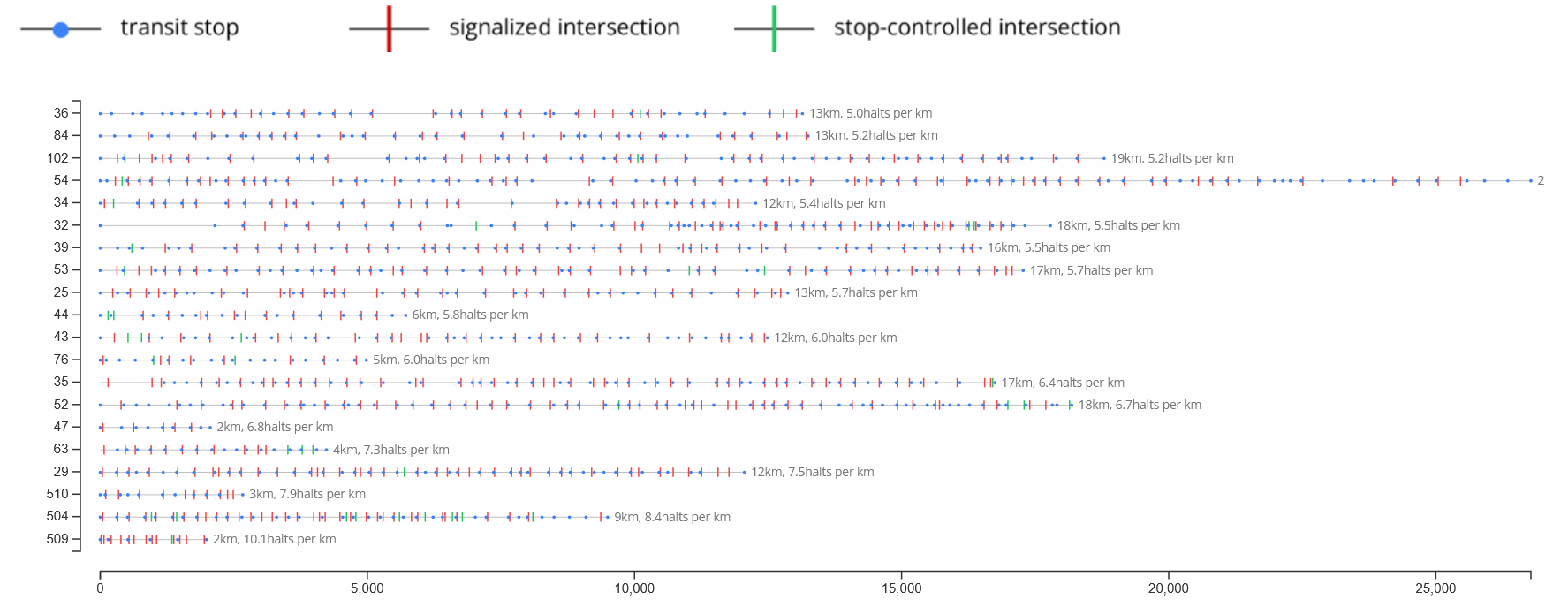
At the risk of becoming traffic lights guy, there is also the fact that the streetcars have to pass through a lot of lights. Have a look at the chart below, which shows the number of stops various TTC routes take along their length. The streetcars not only have a lot of stops compared to the bus routes, but they also go through more traffic signals.
The best traffic signal priority is removing the traffic signal. But to do that, the intersection often needs to be simplified. This can be done by making lateral streets right-in/right-out, or by simply dead-ending them. This would allow the removal of dozens of traffic lights along the streetcar routes.
There are also other ways of reducing the number of cars along a streetcar route. Through traffic can be reduced with contraflow lanes. You can go further and create sections of transit streets. Cities like Zurich and Bologna have adopted limited traffic zones in their downtowns, which limit access to residents, emergency vehicles, people with disabilities, and a limited number of permits for purchase. Bologna takes this a step further with a central “T” which only allows transit vehicles to pass through it. It’s not difficult to imagine something similar for Yonge Street.
I understand why councillors and advocates would have some hesitation in pushing for these changes. It’s been hard enough to get dedicated transit lanes and transit signal priority. These strategies would need to be studied and implemented by Transportation Services, who are not guaranteed to give a warm reception to the ideas.
But I think it’s worth putting the full suite of tools on the table and saying this is what fast streetcars use. We are decades behind other cities and it’s time we caught up. And of course I need to gesture towards the ongoing municipal election and say candidates should support better transit priority.
I’m sure opponents would argue that any given change will only save a minute and that’s not worth the disruption to drivers or loss of parking. But a few changes which each save a minute add up to a few minutes. And for most trips in Toronto, a few minutes is often the difference between worth your time or a waste of time. Suddenly, you have thousands of trips every day that are faster by streetcar. Thousands of cars stay at home. And now you have a streetcar that isn’t just for putting on postcards.
Damien Moule is an engineer, municipal policy nerd, Ward 10 resident, father, and member of More Neighbours Toronto. You can find him on Bluesky at @damienmoule.bsky.social.
In other news
City Hall Watcher’s Andrey Levkovski caught up with Parkdale-High Park Council contender Diana Chan McNally at last week’s Planning and Housing Committee. McNally was emphatic about leaving Billy Bishop Airport as it is and said councillors should help residents pressure Prime Minister Mark Carney’s government to halt the expansion. “If the City doesn’t have the power, people certainly do. And I think a councillor’s role is also to support and galvanize the community to lobby the federal government to stop this,” she told CHW.
More from Matt: on crime as an election game-changer, and “you shall not pass!”
🎧 I was on CBC’s This is Toronto podcast last week to talk about the Salsa on St. Clair shooting, the political fallout, and whether this is a game-changing moment for the mayoral race. Give it a listen.
🗞️ For the Toronto Star this week, I am also writing about streetcars. Writing about streetcars is this year’s hot summer trend, I think. I’m focusing on the TTC’s new pilot project to track the number of drivers who blow by open doors. I like the idea, but I’m not sure why a pilot is necessary when the problem is so clear.
Look for it in your favourite newspaper.
The week at Toronto City Hall
By Andrey Levkovski and Matt Elliott
MONDAY: 🗂️ The General Government Committee met. They confronted the truth about software for cats and dogs. In 2024, the City entered into a no-bid deal with Kingston, Ontario-based tech company DocuPet to try out a new system for licensing Toronto pets. The deal was pitched as coming at no cost to City Hall, as DocuPet would make money by upselling pet owners on “customizable and stylized licensing tags, as well as other pet-related products.”
Despite some “privacy complaints related to DocuPet’s use of customer information”, Council voted to execute another no-bid deal with DocuPet in 2025, but this time there were costs. The City was on the hook for covering about $136,200 annually in credit card fees and postage costs related to the DocuPet service.
A year later, the bill is going up again, as DocuPet is seeking a four-dollar fee for each license issued and a $2.75 fee for every replacement tag given when the original tag is lost. That adds up to another $298,392 annually, bringing the total annual bill for software that started out as a freebie to $434,592.
That’s a more than 200% increase over the 2025 deal, and an infinite increase over the original zero-dollar deal. (To help pay for the ongoing costs, staff are also proposing adding an automatic inflationary increase to the fee charged to license a cat or a dog.)
And DocuPet will retain the right to upsell members of the public on pet products. Woof.
Still, staff are supportive of the deal, arguing that the deal with DocuPet has allowed them to reduce the staff needed to run the previous in-house pet licensing program. But the committee was not yet convinced. Noting there’s an “issue with the financing”, chair Councillor Paul Ainslie moved to send the item to Council without a committee recommendation. He’s asking for staff to produce “updated financial information related to the proposed contract amendment” in time for next week’s Council meeting.
The committee also considered a $14.2 million deal with Beanfield for internet service, and a notable $508,800 deal with Haywood Hunt — a surveillance company. The City needs the contract so it can continue spying on the crews it hires to do tree maintenance, the report says. This “allows for better oversight and performance of tree maintenance contracts,” apparently. Being a tree spy does sound like a fun job.
TUESDAY: 🗄️ Mayor Olivia Chow’s Executive Committee meets.
They’ll check out some always-fun budget and reserve fund variance reports. The operating budget variance report for 2026 shows that City Hall is running on a razor’s edge, posting a $4.6 million operating budget deficit through the end of April and projecting a $97.4 million deficit at year-end. (Reminder: City Hall is not allowed to post deficits.)
The report lists declining transit revenue and increased labour and fuel costs as the major factors behind the disappointing numbers. Everyone knows what’s causing fuel costs to spike, but the other two are interesting.
Notably, the TTC has seen a 50% decline in post-secondary pass sales following federal changes that limited the number of international students coming to Toronto. The wild winter weather was a major blow to fare revenue, too.
On the labour front, overtime costs are up huge at Toronto Fire, after the provincial government passed legislation that increases eligibility for workplace injury compensation and requires firefighters to receive additional training and qualifications. Collectively, the City estimates these changes have resulted in about $43 million in additional overtime costs.
In better news, the municipal land transfer tax continues to somehow stand stubbornly resilient against the forces of the dismal real estate market. The tax brought in $225 million through the end of April, about 10% above the budgeted amount.
The capital variance report, meanwhile, includes three pieces of news: first, the City is doing a much better job of late spending money. The City is on track to spend 89.9% of its $5.4 billion capital budget by year-end. That continues a positive trend.
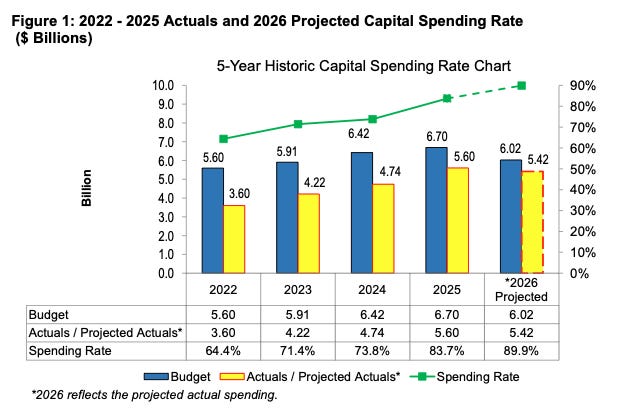
Partly as a result of the improved spending rate, the City’s reserve fund balances actually declined in 2025.
Though more capital spending is generally good — better to spend money fixing and building stuff than just let it sit in a bank account — the report warns that the provincial government’s new Buy Ontario Act could have some negative impacts: “The new procurement requirements may result in delays, affecting project delivery due to extended procurement timelines, which could result in deferring project expenditures to later in the year or into future fiscal periods.” Ominous!
The final 2025 budget variance report also reveals that City Hall will not be BFFs with the province this year. In May, Queen’s Park informed Toronto that the City had not met the province’s housing target for 2025, and that there would be no funds coming to City Hall via the Building Faster Fund (BFF).
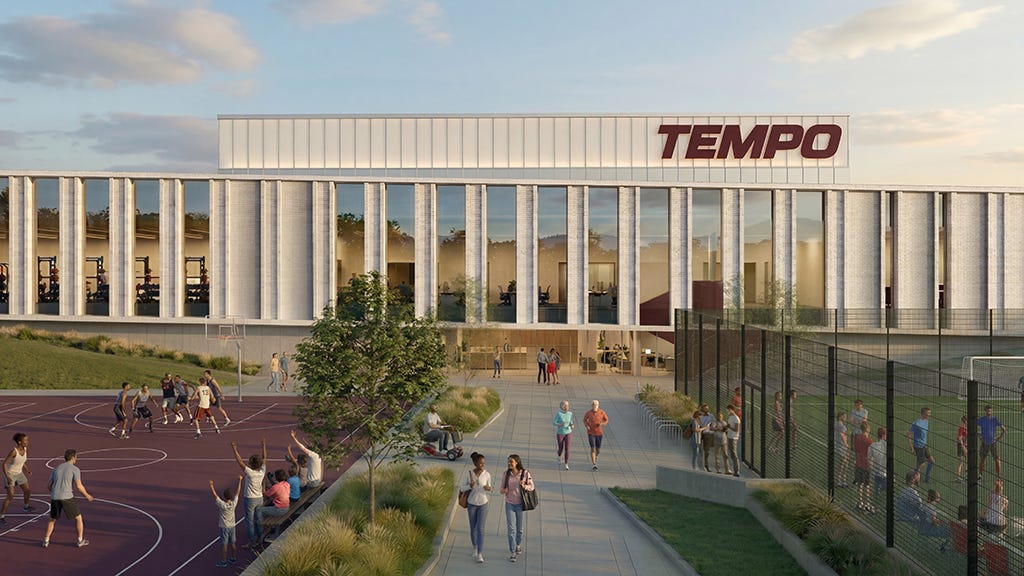
The committee will also consider a proposed deal with the Toronto Tempo. The WNBA team would lease part of the City-owned property at 701 Fleet Street for 40 years, with two possible 20-year extensions, at the low low price of just one dollar per year. The Tempo want to build a roughly 60,000-square-foot practice centre with two indoor basketball courts near their home arena at Coca-Cola Coliseum.
In return, the City will get at least 2,260 hours in the building every year for public programs, camps and permits, with a focus on women, girls and youth. The Tempo will also build a public park with outdoor basketball courts and washrooms. The deal could get the park open at least ten years earlier than currently planned. The practice centre is expected to open in summer 2028, with the park following that fall.
On paper, that sounds like a slam dunk. It is not completely free to the City, though. The City is on the hook to pay about $800,000 a year to operate the park, washrooms and public programs. Exhibition Place also expects to lose approximately $491,000 in parking revenue in 2027, when the existing parking lot disappears.
Also on the agenda:
In February 2025, Council approved the creation of an advisory body to consider the thorny question of municipal autonomy. That led to the creation of the Municipal Autonomy and Effective Local Governance Program Advisory Body. The City calls it “MAPAB” for short, which is… not really an accurate acronym, but whatever. The final report of the group is a useful document, outlining the challenges Toronto City Hall has faced in recent years when it comes to autonomy and recommending the City direct legal staff to work on a single-province amendment to Canada’s Constitution, “which could include a new provision giving constitutionally protected status to City Charters.” Staff are not yet ready to fully embrace that path, however. City Manager Paul Johnson is recommending the committee request a further report analyzing the MAPAB’s findings, due Q3 2027.
The committee will get an update on the Toronto Community Crisis Service, which sends civilian crisis workers to eligible mental health calls. From March 2022 to May 2026, the service received 49,185 calls. In 2025, it received 4,482 eligible calls through 9-1-1 and resolved 76.7% of them without police. Crisis teams also made 11,659 referrals to health and social services. Now the City wants to make the service much bigger. The plan is to move dispatching to Toronto Paramedic Services in 2027, increase the number of calls transferred from 9-1-1 from about 5,300 this year to more than 10,000 a year by 2031, and accept more referrals from hospitals, community organizations, and other institutions. The report estimates the service could eventually receive between 45,000 and 50,000 calls a year. Adopting the recommendation would have no immediate effect on the City’s finances. The 2026 budget already includes $37.3 million for the service. Expansion costs will need to be factored into future budgets. The report says sustaining and expanding the service will require continued investment across different levels of government.
The Executive Committee will consider who should own the Spirit Garden at Nathan Phillips Square. The garden opened in 2024 as a permanent place to honour residential school survivors and the children who were lost to their families and communities. It was developed by the Toronto Council Fire Native Cultural Centre in partnership with the City. The Aboriginal Affairs Advisory Committee wants staff to report to the Executive Committee in the second quarter of 2027 on a possible transfer of ownership of the Spirit Garden site at Nathan Phillips Square from the City to Council Fire, an Indigenous non-profit organization.
WEDNESDAY: 🐕 The Dangerous Dog Tribunal meets. They’ll consider appeals to muzzle orders given to Greyhound Milo and American Bulldog mix Big Louis.
🚇 The TTC Board meets.
CEO Mandeep Lali’s monthly report includes some interesting data from work the transit agency did to prep for a pilot aimed at drivers who pass a stopped streetcar while its doors are open. Before installing cameras on four streetcars, transit checkers manually recorded 145 illegal passes on six routes between December 2025 and March 2026.
Those daily checks found more illegal passes than the Toronto Transit Commission’s ten-year total of passenger-vehicle contact claims. The preliminary results suggest near misses may be common. Shocker.
The nine-month pilot officially starts today. The cameras will measure how often illegal streetcar passing occurs and test the technology’s reliability for future automated enforcement. Basically, it will test whether the camera footage could eventually support tickets. Alas, tickets will not be issued as part of the pilot.
The agenda will also include a discussion of the best way to commemorate the work of the late former TTC chair Howard Moscoe. A report recommends naming the atrium at Yorkdale Station after Moscoe, in part because of Moscoe’s tireless efforts to restore the Arc en Ciel art installation at Yorkdale. After decades in storage, the art is expected to return soon.
In addition, because speeding up streetcars is all the rage these days, Councillor Dianne Saxe has brought a motion to the agenda asking for a report on ways to give some graduated speed to the College streetcar.
THURSDAY: 🚔 The Police Service Board meets.
The cops are asking the board to approve a $10.54-million non-competitive contract with Rampart International for 5,861 Glock G45 duty pistols, 500 compact Glock G43X pistols and 200 training pistols. That is 6,561 pistols altogether. That is a lot of Glocks. 🔫
According to the Police Board report, many of their current pistols are getting old. Some date back to 1992, and replacement parts and ammunition are getting harder and more expensive to buy. Rampart would receive the contract without competition because it is Glock’s exclusive Canadian distributor for military and police customers.
The first $2 million would be reallocated from money budgeted for the new 54 Division police station, with that money scheduled to be returned to the station project through the 2027 budget. Police would seek the remaining $8.54 million through the 2027 capital budget. Staff estimate that lower ammunition and repair costs would make the switch roughly cost-neutral over ten years, with nominal savings of $166,000.
The board will also get an update on the state of the $1.4 billion police budget. Even with the big spending envelope, the cops are on track to post a $15 million deficit this year. The overrun is driven almost entirely by premium pay.
The agenda also includes Chief Myron Demkiw’s annual report, which includes a note making it clear the cops were totally ready to let George Springer ride a police horse, had the Toronto Blue Jays won the World Series last fall:
Following post-game comments by Blue Jays player George Springer about celebrating with a ride on a police horse, the Mounted Unit publicly invited Springer to ride Service horse Blue Jay should the team win the World Series. While the Blue Jays did not ultimately secure the title, the exchange reflected the Service’s commitment to approachable, community-focused policing.
🏚️ The Preservation Board meets.
Planning staff are recommending heritage designation for the Weston Lions Arena on Lawrence West. It’s another twist in the long-running saga for the arena, which was built in the late 40s. At one point, the arena was slated for the wrecking ball, as part of a plan to build a new MLSE Launchpad recreation facility on the site. After Premier Doug Ford and a bunch of angry hockey players raised their sticks in protest, the plan was revised to maintain the arena while building a youth sports hub next door.
The board will also consider designating Simcoe Hall and Convocation Hall, two U of T landmarks that have been listed on the City’s Heritage Register since 1973. These buildings score seven out of nine criteria points for their architecture, history and contribution to university life, which is impressive since only two points are needed. Safe to say they pass with honours.
FRIDAY: 🅿️ The Parking Authority Board meets. Their agenda includes a report recommending a seven-month extension of the contract with Shift Transit to operate the Bike Share system. The $14 million deal is presented as a temporary move while staff put together a big RFP for a long-term operator, which is planned to launch in Q1 2027.
A separate budget report shows the Bike Share system continues its uphill climb. Revenue through the end of June was $7.9 million, up $1.5 million compared to 2025.
NEXT WEEK: Council meets, for the last and final time this term. Get hyped.
Weekly wrap
🗳️ CANDID CANDIDATES: The 2026 Election Candidate Tracker has been updated — with new registrations from incumbent councillors Frances Nunziata, Chris Moise, Neethan Shan, Nick Mantas and Alejandra Bravo.
🪧 SIGNS OF THE TIMES: 118 TANGLE BRIARWAY: Tangle Briarway; 4925 STEELES AVE W: Electronic Static Billboard; 790 MILITARY TRL: Popeyes; 437 SPADINA AVE: Puuffy; 240 EGLINTON AVE E: Flossy; 621 SHEPPARD AVE E: Injection Lounge Aesthetics Clinic; 126 MARTIN ROSS AVE: Empire Hardware; 322 CHURCH ST: Student Community Centre; 1401 HUNTINGWOOD DR: Ram Plastics; 1001 QUEEN ST E: New Era; 105 RIVER ST: Aic Tile Studio; 3385 DUNDAS ST W: Fabutan Hush Lash Studio; 3125 STEELES AVE E: Yondr; 2268 KINGSTON RD: Brik Construction Inc.; 941 PROGRESS AVE: Centennial College; 29 BATHURST ST: Setai Dental; 141 BAY ST: CIBC. (Sign Permit Applications since July 13, 2026)
City Hall Watcher #393
Thanks for reading! And thanks to Damien and Andrey for their contributions this week. Andrey and I will be back next week to preview the agenda for the final Council meeting of the term. The agenda isn’t published yet, but I can already tell you one thing about it: it will be long as hell.
You won’t want to miss it. If you’re not yet a paid subscriber, consider mashing the button.
Well, and also how expensive it was. And ugly. And… let’s just say it wasn’t warmly received.
Throughout this article, I am going to refer to the transit mode as streetcars. For other cities I would normally refer to them as trams, because that is a much more common term globally across multiple languages. But this is a newsletter about Toronto municipal politics, and so I will use our local vernacular when talking about similar systems in other cities as well.
There were some truly terrible streetcars built in the U.S. in the 2010s and it wouldn't surprise me if one or more of them were slower than Toronto's streetcars. And Milan's streetcars may be slower than Toronto's on average.
You can’t actually stop me. Sorry.
I would argue none of the dedicated streetcar lanes on Spadina, St. Clair, or Queens Quay are that good as transit priority, mostly because they still allow too many left turns. Same with the Finch LRT and the surface segments of Eglinton.
There are some streets that are slightly offset from one another, so you may get a slightly different count of intersections than me.
I would argue trying to discourage cars from turning onto Bathurst is just as important as discouraging them from delaying the streetcar with left hand turns off of Bathurst. This is both because fewer cars using Bathurst would mean fewer cars blocking the streetcar with left turns, and also because the space for cars to queue at lights on Bathurst has been reduced so it would be good to reduce the number of cars on Bathurst to avoid overflow at peak times.
And I want to be clear, I support the Bathurst lane, but I would have been happier if the proposal was better. I thought some of the critiques were misguided in their focus on loss of parking. I think parking in the densest parts of the city has negative value and that removing spaces is a plus not a minus.
The Finch and Eglinton LRTs were both launched with some transit signal priority. This included green extension, where a green light can be extended if a transit vehicle is approaching the intersection, and red truncation, where a red light is shortened if a transit vehicle is waiting. This is also the type of transit signal priority currently used across the streetcar network, though it is only effective at intersections without transit stops, or where the stops are located after the intersection like on Spadina. For intersections where the transit stop is before the intersection, green extension can range from a small transit priority to a small penalty depending on the timing details.
I don't know, Matt. I kind of like the slowness of streetcars. Cittaslow! Remember that movement (pun intended)?